Representation
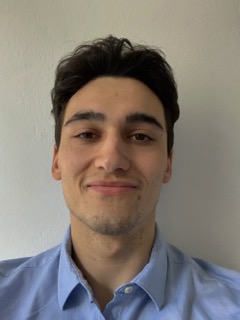
Giovanni Briglia
PhD student, National PhD in AI · UNIMORE · visiting the University of Oxford
Agents that learn modular models of what their actions do.
I study how agents can learn structured world models: factored models in which each variable has its own local mechanism on an explicit graph, and how to use them to decide under uncertainty. With Neural Bayesian Networks, the graph stays explicit while each conditional is learned by a neural density estimator, so models run efficiently on GPUs, keep a modular, inspectable structure, and can be revised one mechanism at a time when the world changes. At Oxford I am exploring how such models connect to Markov decision processes and formal methods, to reason about how far an agent's decisions can be trusted.
Supervised by Franco Zambonelli and Stefano Mariani at UNIMORE. At Oxford I’m hosted by Alessandro Abate and Francesco Fabiano.
Award
Best Paper Award, AREA Workshop @ ECAI 2025
Oral
Full paper with oral presentation at AAMAS 2026
Doctoral Consortium
AAMAS 2026, mentored by Christopher Amato
Visiting
University of Oxford, from September 2026
Research agenda
Three questions shape my PhD
They go from how a world model is represented, to how decisions built on it can be trusted, to what changes when many agents share one environment.
Decision-making
How should such models enter planning, policy optimisation and value estimation? And, in ongoing work at Oxford, how can the uncertainty of a learned model be carried into the decisions made with it, so that we can say how far those decisions can be trusted?
Multi-agent
How can causality-driven RL extend to multi-agent settings, where cooperation and competition add new layers of interdependence?
Publications
Papers and preprints
2026
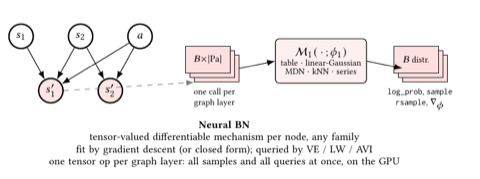
Neural Bayesian Networks for Modular and Scalable Decision-Making Under Uncertainty
arXiv preprint 2610.16902
2026
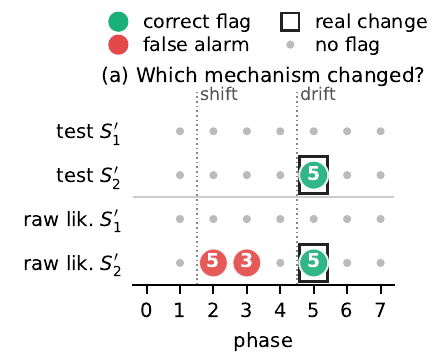
Neural Bayesian Networks as Continual World Models for Reinforcement Learning
Continual World Models Workshop @ NeurIPS 2026
2026
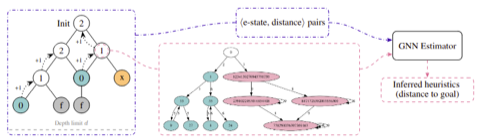
Scaling Multi-Agent Epistemic Planning through GNN-Derived Heuristics
AAMAS 2026 · Full paper
2026
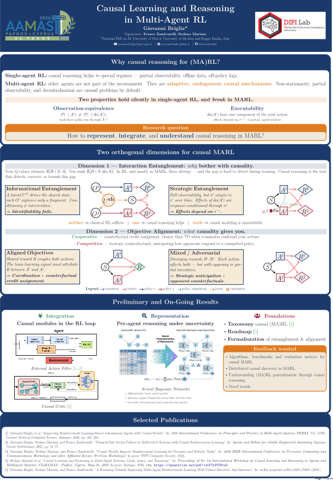
Causal Learning and Reasoning in Multi-Agent Reinforcement Learning
AAMAS 2026 · Doctoral Consortium
2026
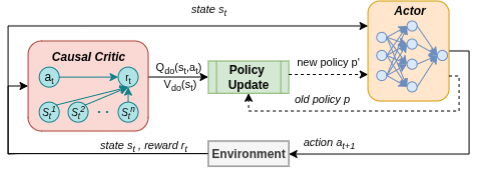
Causal Models Improve Reinforcement Learning for Pervasive and Robotic Tasks
CoMoRe-AI Workshop @ IEEE PerCom 2026 · in press
2026
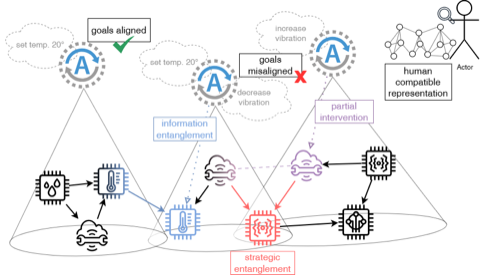
Causal Learning and Reasoning in Multi-Agent Systems: Goals, Issues, and Taxonomy
CLaRAMAS Workshop @ AAMAS 2026 · in press
2025
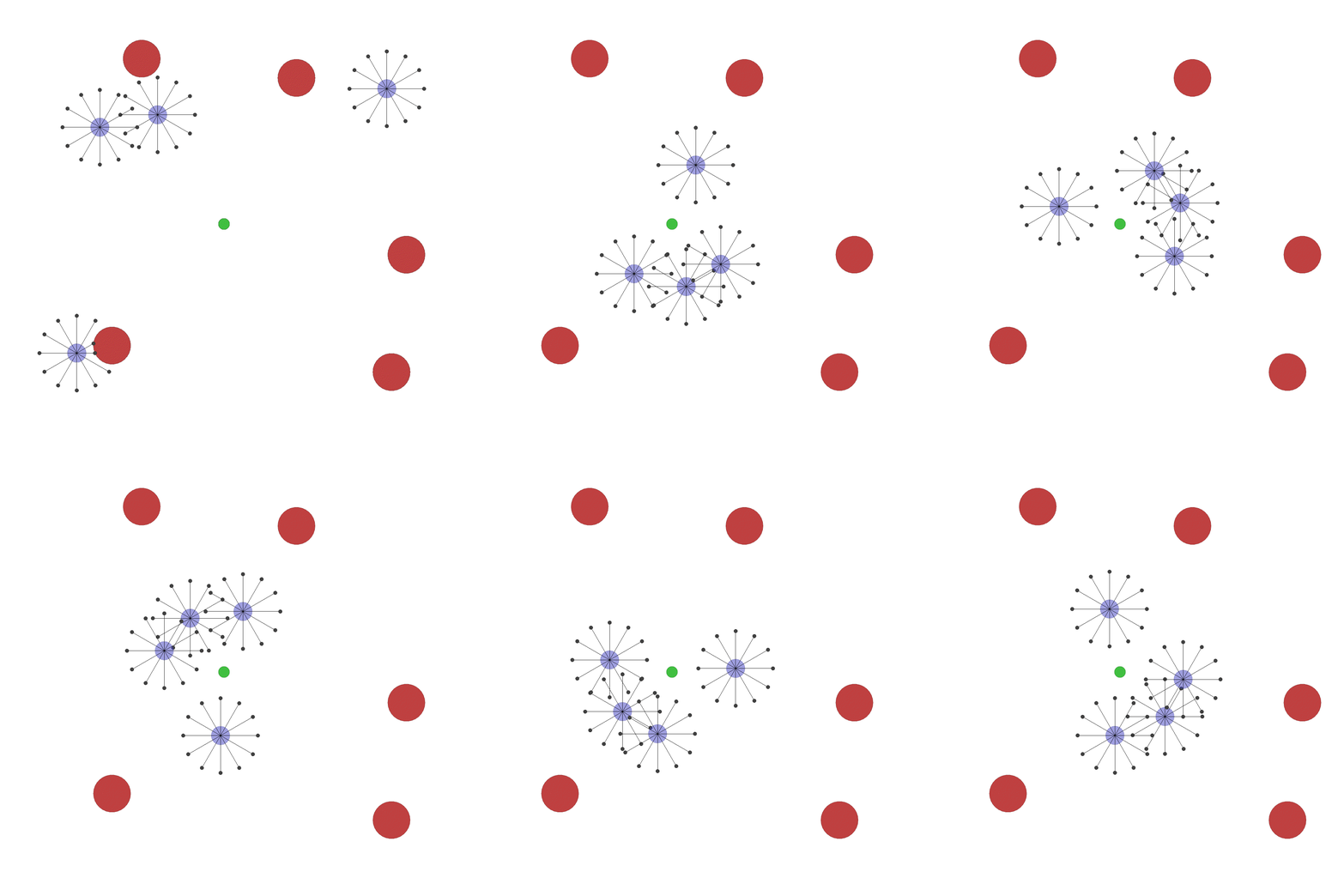
Towards Safe Action Policies in Multi-robot Systems with Causal Reinforcement Learning
AREA Workshop @ ECAI 2025
2025
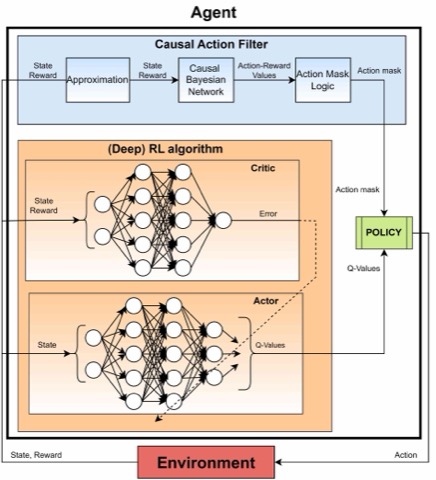
A Roadmap Towards Improving Multi-Agent Reinforcement Learning With Causal Discovery And Inference
arXiv preprint 2503.17803
2024
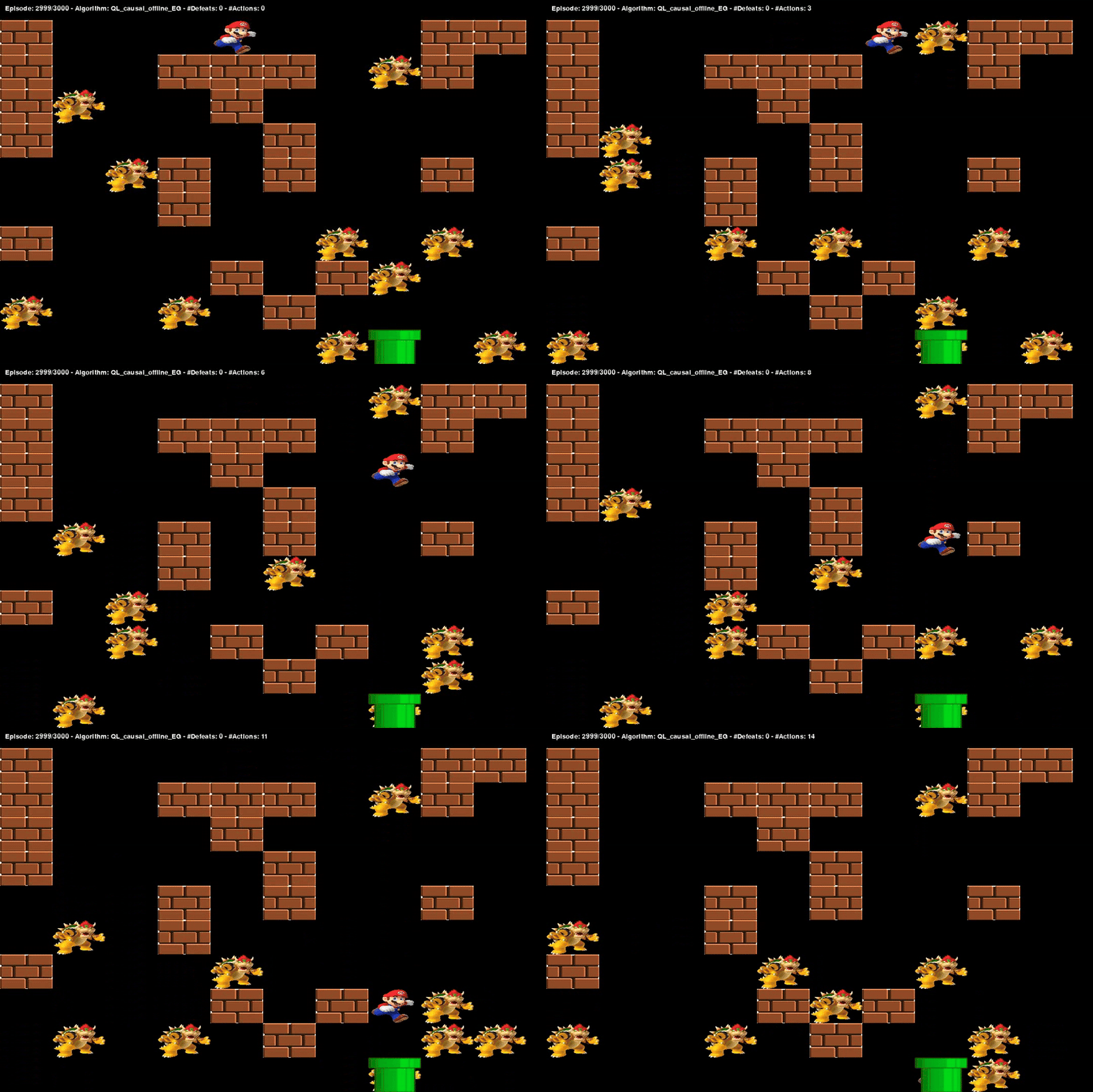
Improving Reinforcement Learning-Based Autonomous Agents with Causal Models
PRIMA 2024 · Kyoto
2024
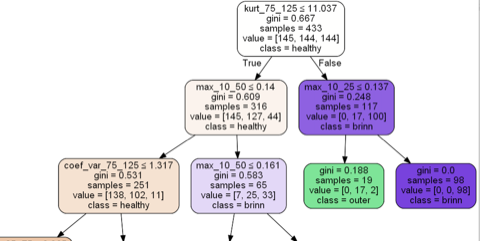
Bearing Fault Detection and Recognition From Supply Currents With Decision Trees
IEEE Access, vol. 12
2023
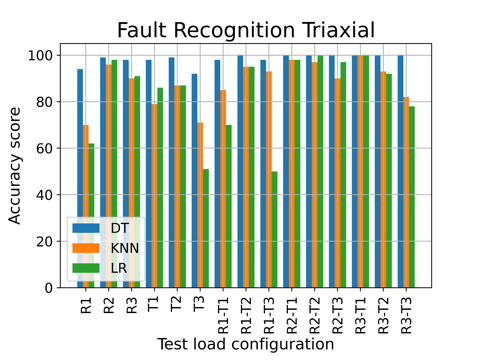
Cross-Load Generalization of Bearing Fault Recognition with Decision Trees
ICSRS 2023
News
Oct 2026
Our paper Neural Bayesian Networks as Continual World Models for Reinforcement Learning was accepted at the NeurIPS 2026 Workshop on Continual World Models! The world model finds which mechanism changed and relearns only that one. Code.
Oct 2026
New preprint: Neural Bayesian Networks for Modular and Scalable Decision-Making Under Uncertainty. NBNs keep the graph of a Bayesian network and learn each conditional as a batched, GPU-ready mechanism. The NBN library and benchmark are open source!
Sep 2026
I was hosted by Prof. Alessandro Abate for an OXCAV seminar, presenting When, Why, and How Causality is needed in Reinforcement Learning!
Sep 2026
I am attending the Erlangen AI Conference hosted at the Mathematical Institute of the University of Oxford! I am presenting my vision of causality in MARL :)
Jun 2026
I presented my PhD Thesis outline “Causal Learning and Reasoning in Multi-Agent Reinforcement Learning” at the AAMAS 2026 Doctoral Consortium. Poster here. It was also a pleasure to have had Christopher Amato as a mentor.
Jun 2026
I presented our work “Scaling Multi-Agent Epistemic Planning through GNN-Derived Heuristics” at AAMAS Conference 2026, in the Planning and Learning track. Slides here.
Older news (10)
May 2026
I am excited to announce that, starting on September 1st, I will begin a PhD Visiting Research period at the University of Oxford, where I will be hosted by Alessandro Abate and Francesco Fabiano!!
Jan 2026
Our paper Causal Models Improve Reinforcement Learning for Pervasive and Robotic Tasks has been accepted at the CoMoRe-AI 2026 Workshop, within the IEEE PerCom Conference. Check out the presentation slides here.
Dec 2025
Our paper “Scaling Multi-Agent Epistemic Planning through GNN-Derived Heuristics” has been accepted as a full paper at AAMAS 2026, with an oral presentation!! 🚀🚀
Oct 2025
🚀 Our paper, “Towards Safe Action Policies in Multi-robot Systems with Causal Reinforcement Learning”, received the Best Paper Award at the AREA Workshop @ ECAI 2025! 🎉
Oct 2025
Sep 2025
Excited to share our new preprint: How to Scale Multi-Agent Epistemic Planning with GNNs!! Now available on arXiv !!
Mar 2025
New pre-print on Causal MARL is now available on arxiv !!
Dec 2024
Christmas game early 🎅: I am excited to share that I have been selected to participate in the Data Study Group this January-February, organized by The Alan Turing Institute.
Sep 2024
Our paper, “Improving Reinforcement Learning-based Autonomous Agents with Causal Models,” has been accepted as a regular paper at the 25th International Conference on Principles and Practice of Multi-Agent Systems (PRIMA), which will take place in Kyoto, Japan, from November 18-24, 2024.
Aug 2024
Site online!!
Talks
When, Why, and How Causality Is Needed in Reinforcement Learning